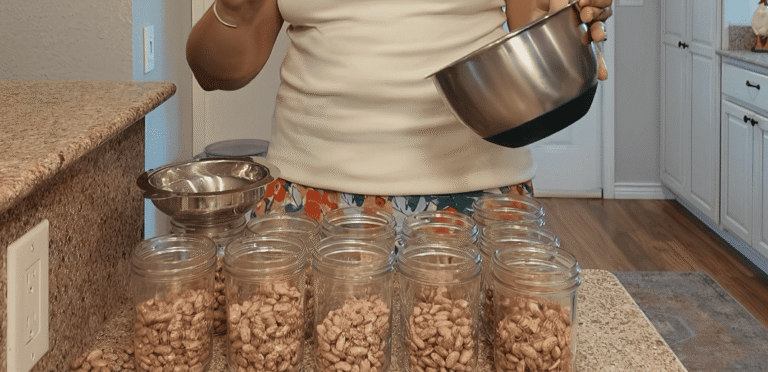

When Grandpa passed, my mom found a handful of his bean seed in one of those Folgers cans and mailed it to me in Ontario in a ziplock bag. I think there were maybe 30 beans. I planted every single one.
That was 2017. I’ve grown those beans every year since, and I’ve never bought another packet. That’s the whole magic of seed saving, and honestly it’s so much easier than people think.
Start with the easy ones
Only save seed from open pollinated or heirloom plants. Hybrids (marked F1 on the packet) won’t come back true.
For your first year, stick with plants that mostly pollinate themselves: beans, peas, lettuce, tomatoes and peppers. Leave squash, cucumbers and corn alone for now. They cross with each other super easily, and I once grew a “zucchini” from saved seed that turned out to be some lumpy yellow mystery thing. Juniper liked it. Nobody else did.
Beans and peas
The easiest seeds in the world.
- Pick a few of your healthiest plants and stop harvesting from them.
- Let the pods dry right on the plant until they’re brown and rattly.
- Shell them and let the seeds dry inside another week or two.
Up here, frost sometimes beats the pods. When that happens I pull the whole plant and hang it upside down in the garage. They finish fine.
Tomatoes (the gross one)
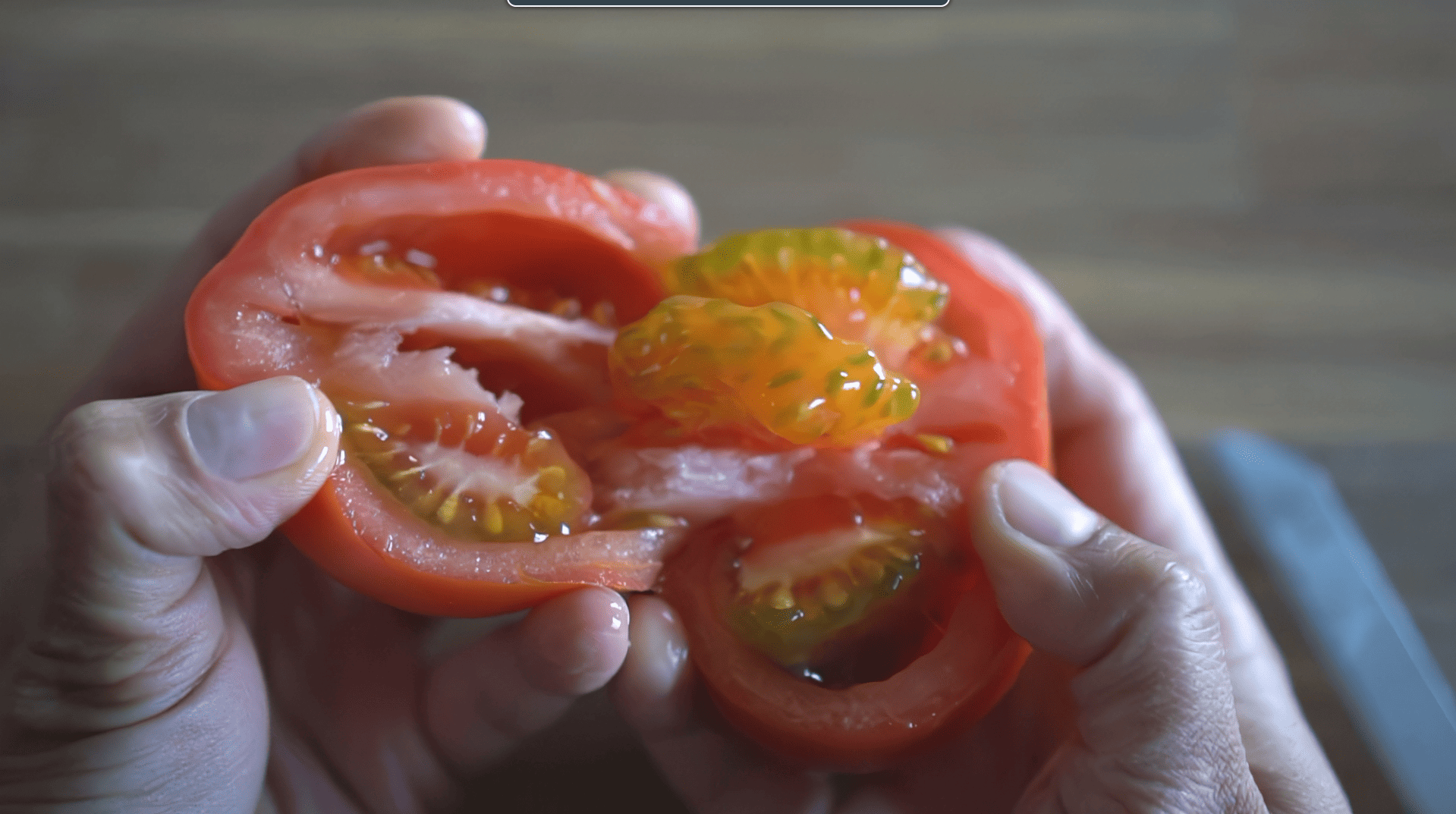
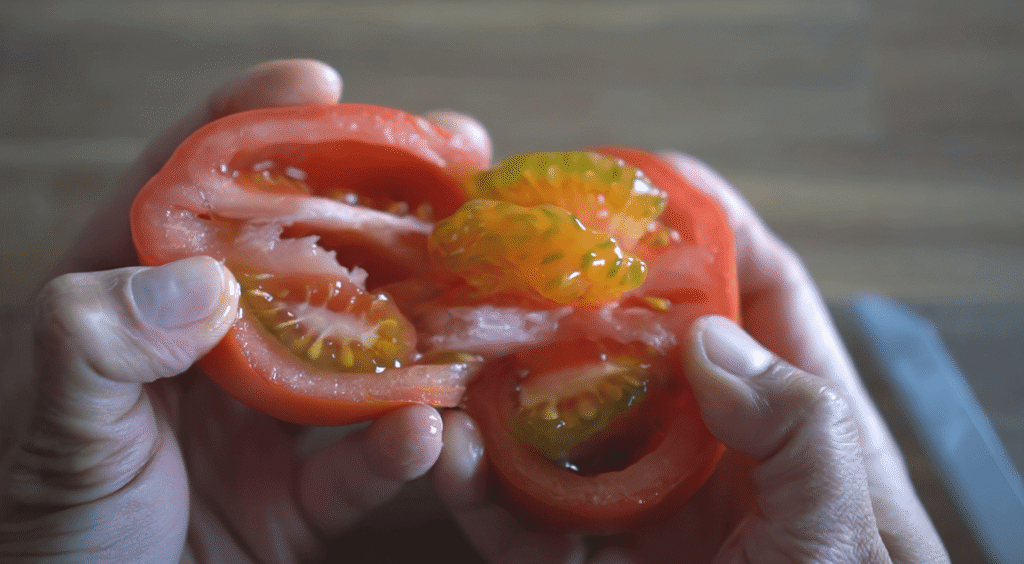
Tomato seeds have a gel coat that needs to ferment off. Here’s what I do every September:
- Squeeze the seeds and goop from a really ripe tomato into a jar with a splash of water.
- Leave it on the counter for 2 to 4 days. It’ll grow a layer of mould. Mark hates this week.
- Pour off the mould and any floating seeds. The good ones sink.
- Rinse in a strainer and spread them on a coffee filter to dry. Not paper towel. They glue themselves to paper towel and you’ll be planting tiny bits of Bounty next spring.
Lettuce and peppers
For lettuce, let a plant or two bolt and go to flower. When you see little white fluff puffs (like tiny dandelions), shake the heads into a paper bag every few days.
Peppers are simple. Let one fully ripen on the plant, cut it open, scrape out the seeds, dry for a week or two. Gloves for hot peppers. Trust me on that one.
Storing it all
Cool, dark and dry is the rule. Make sure seeds snap instead of bend before you pack them up. I use paper envelopes labelled with the variety and year, all inside mason jars with a silica gel pack from a shoe box tossed in. The jars live in the basement where the temperature stays steady.
Most seeds stay good for 2 to 5 years like that. Onions and parsnips are the exception. Use those within a year.
Save from your best
This is the part that gets me excited. Every year I save from the plants that did best here. The tomato that ripened first. The bean plant that shrugged off the cold snap. The lettuce that held out longest before bolting.
Grandpa’s beans have had nine years of that now. They’re not really Iowa beans anymore. They’re Thunder Bay beans. I think he’d like that.